Private jet charter and flights to Wales
At just 160 miles from north to south and 50 miles east to west, Wales is only a small country however it packs plenty in. With modern port cities, historic mining towns clinging to the sides of verdant valleys and a wealth of stunning natural landscapes, this culture-rich country is a joy to explore. Head to the peak of one of the UK’s most famous mountains, follow jaw-dropping coastlines and head deep below ground to discover the rich industrial past. Experience it all today, charter a private jet.
Strung along Wales’ south coast are the three port cities of Cardiff, Swansea and Newport. Cardiff, the capital, is a city rich in culture and sporting pride. The city is home to many national institutions, such as the National Assembly for Wales, as well as modern venues like the Wales Millennium Centre and the much-revered Millennium Stadium (officially known as the Principality Stadium), the home ground of the Welsh rugby team – another national institution.
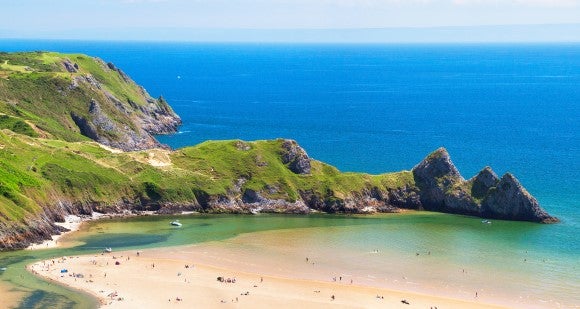
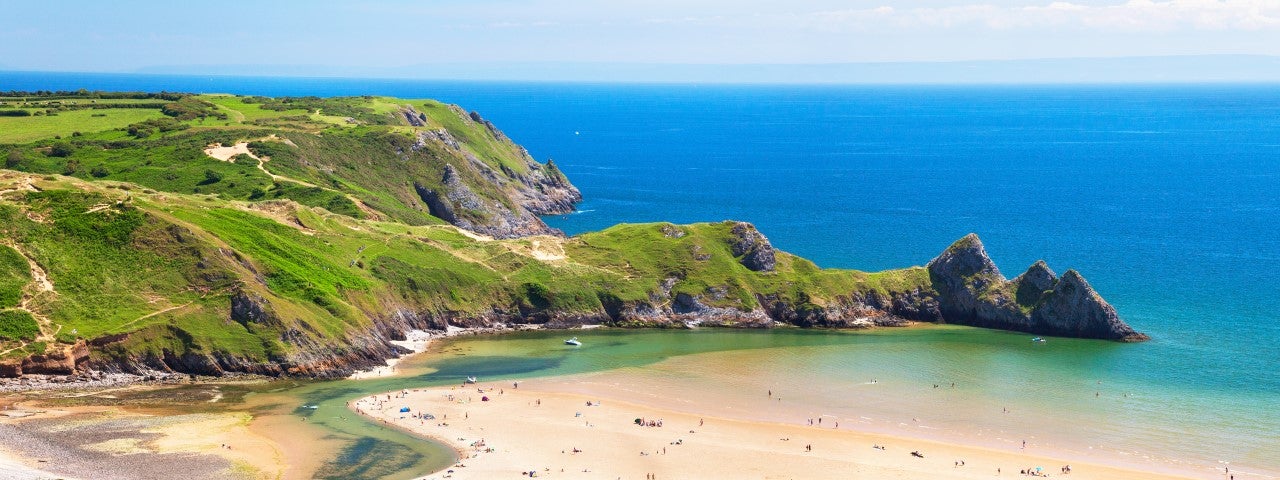
Head west and you’ll reach sprawling Swansea, the country’s third-largest city and the gateway to the beauty of south-west Wales. Head to the Maritime Quarter where you can explore the well-regarded National Waterfront Museum and learn about the country’s industrial past. Just on the doorstep is the Gower Peninsula, the first spot in the UK to be granted the status of Area of Outstanding Natural Beauty. Walk out to Worm’s Head at low tide, a rocky promontory that stretches out into the Bristol Channel for epic sea views; feel the sand between your toes on the breathtaking Rhossili Bay Beach, a favourite with surfers and summer sun-seekers; and see the relics of Neolithic settlements that are scattered across the landscape.
While the Gower might be striking, it’s the Pembrokeshire coast that’s the true beauty when it comes to coastal landscapes. The jewel in south-west Wales’ crown is the national park that protects this striking scenery. There are four sections of the park that incorporate rugged coastal cliffs, sweeping bays, hidden coves and craggy islands and cover inland hills and moorlands. The best way to see the coastline is on foot. You can follow the 186-mile Pembrokeshire Coast Path National Trail that winds past 58 beaches and 14 harbours on its way from the beachfront town of Amroth to the riverside village of St Dogmaels. In its entirety, the trail takes about 10 days to two weeks to complete, however, there are plenty of one-day walks if you are pushed for time.
To the north of Swansea, Cardiff and Newport there are parallel-running valleys scattered with historical towns clinging to rolling hillsides. Known simply as the Valleys, this corner of Wales was once one of Great Britain’s coal mining centres. And while the mines are now abandoned, the scars of this formerly dynamic industry are still clear to see. The 16-mile-long and mile-wide Rhondda Fawr is one of these valleys that was once packed with working pits and home to over 160,000 people. The Rhondda Heritage Park is a must-visit if you want to find out what life was like for people working in the mines and how a million or so tonnes of coal was extracted from the ground annually. About 30 miles away is the Big Pit National Coal Museum where you can head down 90 metres underground on a 50-minute tour of the mine itself.
The second of the three Welsh national parks is the Brecon Beacons National Park, a popular destination for hardy hikers. The 520 square mile park protects river valleys, lakes and craggy peaks as well as caves and moorlands. Popular walks in the region include the hike to the top of Sugar Loaf and the trail to the top of South Wales’ highest mountain, Pen y Fan. Urban areas in the region included the market town of Abergavenny and Hay-on-Wye – the ‘town of books’ – which is home to the annual literary Hay Festival.
Dwarfing the hilly heights of the Brecon Beacons are the dramatic peaks of Snowdonia, the final of Wales’ trio of protected parks. Shaped by ice and the elements, these rugged mountains are the highest in the country. Snowdon is the loftiest of these and the hike up to the top is one of the United Kingdom’s most popular. There’s also a cog railway that ascends to the peak carrying those less inclined to follow the steep incline. Other mountains are far quieter than the poster-child peak such as Cnict, also known as the ‘Welsh Matterhorn’.
Up in the country’s top-left corner is the island of Anglesey reached by crossing the narrow Menai Strait via the striking Menai Suspension Bridge, the world’s first modern suspension bridge. See the beautiful South Stack Lighthouse and surrounding cliffs where puffins, choughs and guillemots nest on precarious ledges; follow parts of the 125-mile Anglesey Coastal Path around the island’s edge; and explore the never-completed Beaumaris Castle, a UNESCO World Heritage Site which was built under the reign of the 13th-Century monarch, Edward I.
Alongside the main international airport in Cardiff, Wales is served by a handful of smaller regional airfields. Simply contact one of our team and we can arrange everything you need to charter a private jet to Wales.