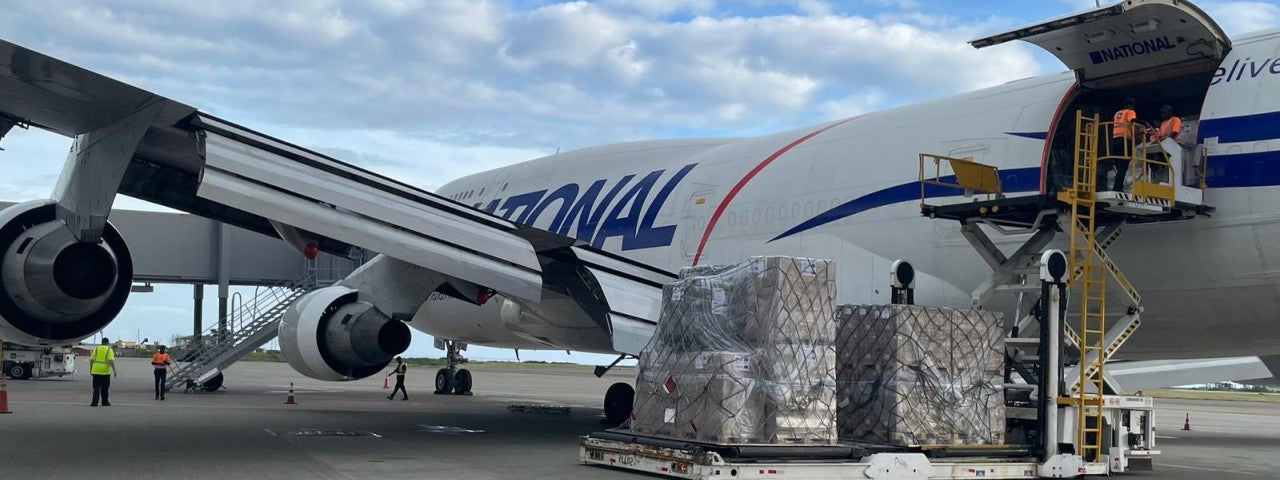
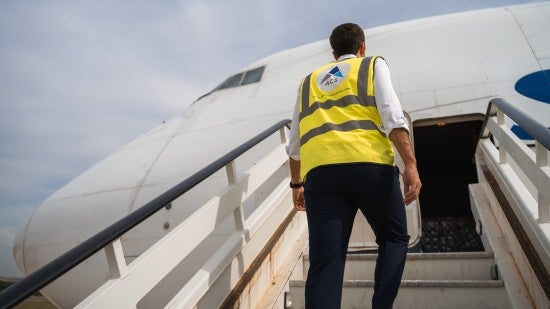
 Charter the powerful Boeing 747‑400F – offering exceptional payload, long‑range performance and nose‑loading for complex cargo.


Boeing 747-400F
The undisputed queen of heavy freighters – discover why the Boeing 747-400F remains the benchmark for long-haul cargo operations across the globe.
Powerful, prolific, and unmistakable on any ramp, the Boeing 747-400F stands as one of the most consequential cargo aircraft ever built. Combining the legendary 747’s iconic four-engine airframe with a dedicated, purpose-optimised freighter configuration, the -400F offers unmatched payload capacity, intercontinental range, and the versatility to handle virtually any freight challenge – from time-critical express shipments to outsize industrial cargo. For operators and charterers demanding maximum capability, the 747-400F consistently sets the standard.
Design and development
The 747-400F traces its lineage to the original Boeing 747 freighter programme of the 1970s, itself an evolution of the iconic ‘Queen of the Skies’. Boeing developed the -400 series in the late 1980s as a thoroughly modernised variant, incorporating advanced avionics, winglets for improved fuel economy, and a two-crew digital flight deck – eliminating the need for a flight engineer. The freighter variant, the 747-400F, was launched to serve the booming global air cargo market and first entered service in 1993.
Unlike passenger-to-freighter conversions, the 747-400F was engineered from the outset as a dedicated cargo platform. Its distinguishing features include:
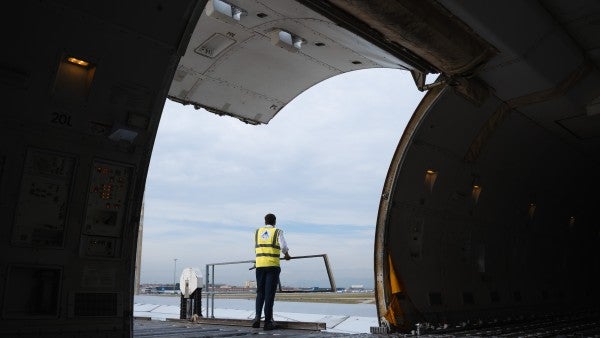
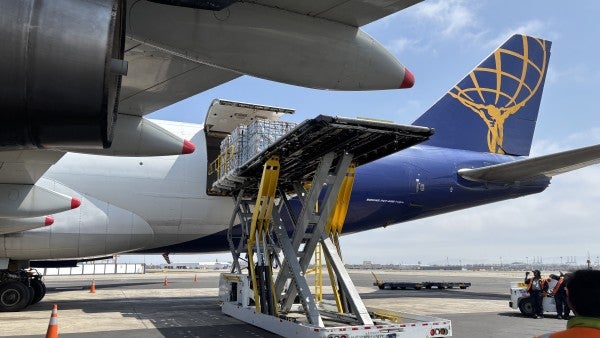
- A nose-loading cargo door that swings upward to allow straight-in loading of oversized, palletised, and containerised freight – a hallmark capability absent from most converted freighters;
- A main deck side cargo door providing supplementary access for flexible loading configurations; and
- Reinforced main and lower decks engineered to withstand the stresses of repeated heavy freight operations over decades of service;
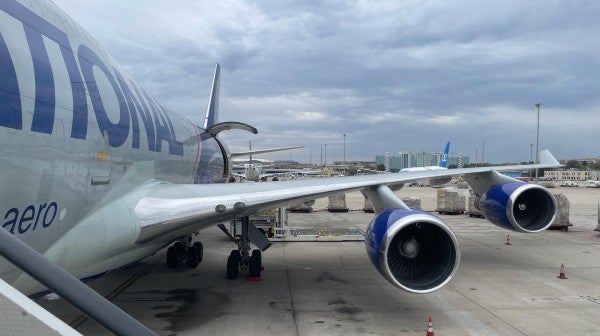
- Four high-bypass turbofan engines – typically Pratt & Whitney PW4056, General Electric CF6-80C2, or Rolls-Royce RB211-524 variants – the 747-400F delivers the thrust to haul full payloads across intercontinental sectors with authority.
Key facts and stats
- Maiden flight: 1993
- Introduction: 1993
- Main hold size (L x W x H): 4800x486x304cm / 1889x191x119in
- Payload: 120,000kg / 264,554lbs
- Door size (W x H): 340x312cm / 133x122in
- Maximum range: 3870nmi / 7169km
- Features:
- Nose-loading capability – purpose-built nose cargo door enables straight-in loading of outsized cargo items impossible to accommodate on converted freighters.
- Intercontinental heavy-lift range – the ability to carry over 100 tonnes across more than 8,000 kilometres makes the 747-400F the go-to aircraft for transoceanic freight missions.
- Triple-deck freight capacity – main deck, lower forward hold, and lower aft hold combine to provide over 850 m³ of usable cargo volume across a single sortie.
Operational edge
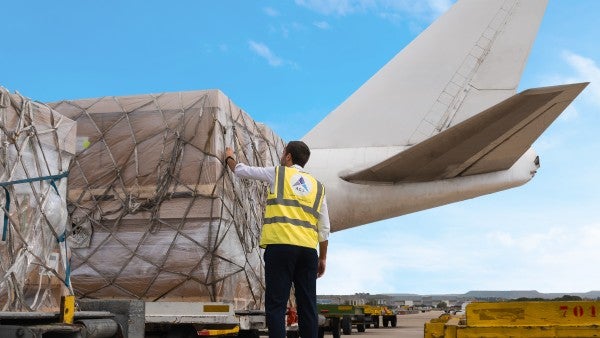
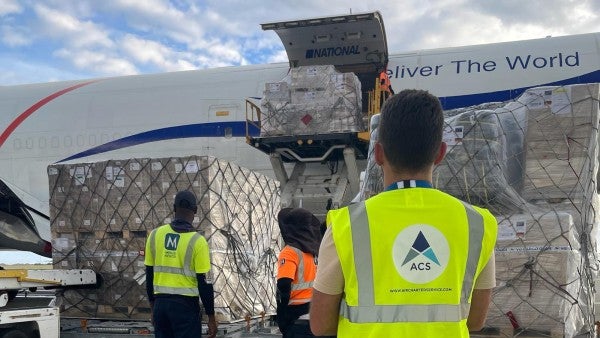
In practice, the 747-400F’s operational proposition is built on scale, reach, and reliability. Its main deck accommodates up to 30 industry-standard 96-by-125-inch pallets, while the lower holds add substantial supplementary volume for bulk cargo, LD-1 containers, or mixed consignments – giving operators exceptional loading flexibility for complex, multi-commodity shipments.
The nose-loading door is perhaps the aircraft’s single greatest advantage in the cargo market. Unlike side-door-only freighters, the 747-400F can accept outsized items – engine nacelles, yacht hulls, industrial machinery, and aerospace components – that would simply be impossible to load via a conventional side door. This capability has made it indispensable for the aerospace, oil and gas, automotive, and relief logistics sectors.
With range sufficient to connect major cargo hubs non-stop – Frankfurt to Chicago, Hong Kong to Dubai, Nairobi to Amsterdam – the 747-400F eliminates intermediate stops and their associated handling costs, ground time, and cargo-integrity risks. For time-critical consignments, that point-to-point performance is invaluable.
Operators have relied on the 747-400F as the backbone of their long-haul networks for decades, testament to the aircraft’s dispatch reliability, parts availability, and operator familiarity. For ad hoc charter clients, this maturity translates into predictable scheduling, well-established ground handling procedures, and a global pool of type-rated crew.
Ready to move heavy or outsize cargo?
Contact us today to discuss the charter of the Boeing 747-400F or explore alternative heavy freighter options. Our team can advise on aircraft suitability, payload planning, nose-door requirements, and rapid-response charters tailored to both your shipment and your exacting operational requirements.